
Free Shipping on all orders over $150.00 in Canada
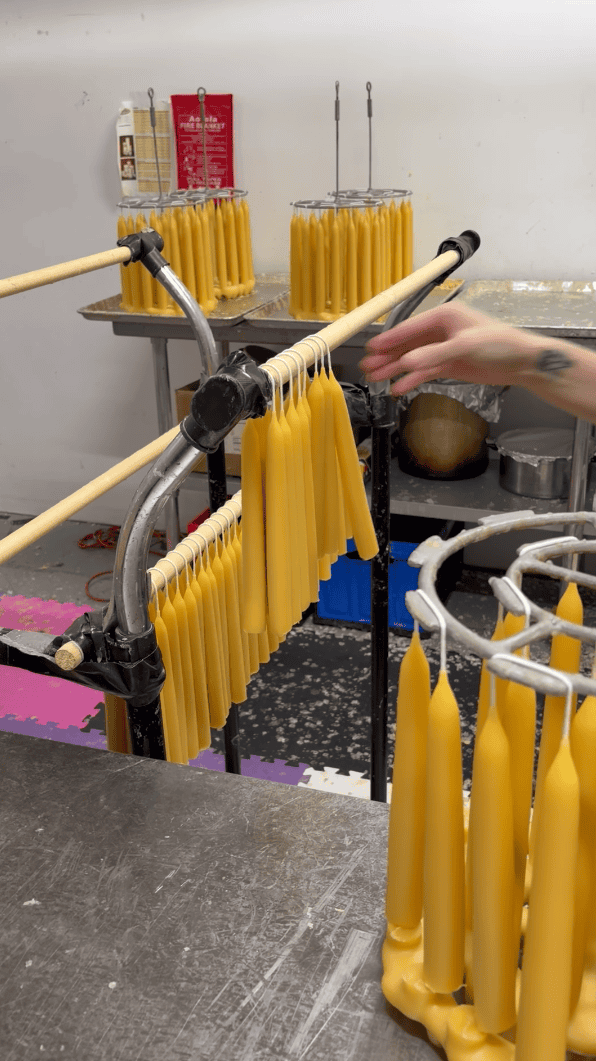
A few years ago, “handmade” was mostly a label you’d see at a craft fair. Today, it’s starting to feel like a statement. As AI tools get better at generating images, designs, even entire product mockups in seconds, the gap between what’s real and what’s rendered is getting harder to spot, and that’s a problem for actual makers.
Search for candle inspiration online right now and you’ll find a growing mix of real product photos next to AI-generated images of candles that don’t exist, in jars that were never blown, with wax that was never poured. Some of these images are stunning. None of them were made by anyone.
For small, handmade businesses, this creates a strange kind of noise. Customers are scrolling past more “products” than ever, but fewer of them are real, and it’s getting harder for actual craftsmanship to stand out in a feed full of polished nothing.
Handmade work carries small imperfections on purpose. A beeswax candle poured by hand will never be perfectly identical to the one next to it, a slightly different drip pattern, a faint variation in color depending on the batch of wax. That’s not a flaw. That’s proof a human being actually made it.
AI can generate an image of that same “imperfection” without anyone ever touching a mold or trimming a wick. It can mimic the aesthetic of handmade without any of the labor, time, or skill behind it. For artists and makers, that’s more than a style problem, it’s a livelihood problem. If people start associating “handmade looking” with something a computer generated for free, the actual humans doing the work have a much harder time being seen, let alone paid fairly for their time.
We’ve been hand dipping and hand pouring candles in Cobourg, Ontario since 1999, long before anyone was talking about algorithms generating art. Our process hasn’t changed because the tools around us have. Every candle that leaves our shop was poured by an actual person, in an actual workshop, using actual beeswax from actual bees.
That said, we think it’s worth saying out loud: supporting handmade work right now means something a little different than it used to. It means knowing who made the thing you’re buying, and choosing that, on purpose, even when a quicker, cheaper, AI generated looking alternative is one click away.
We’re not anti technology. We just believe some things shouldn’t be automated away, the time it takes to hand roll a wick, the small batch attention that goes into every pour, the fact that a real person signed off on every candle before it left our hands. That’s not something AI can replicate, no matter how good the image looks.
So the next time you’re choosing between something mass produced, AI assisted, or truly handmade, we hope you’ll remember what you’re actually paying for: not just a product, but the person behind it.
When you buy a Cheeky Bee candle, you’re not just lighting a wick, you’re supporting a real person, a real workshop, and a tradition that’s been alive in Ontario since 1999. Browse the collection and bring a little bit of that handmade difference into your home.
